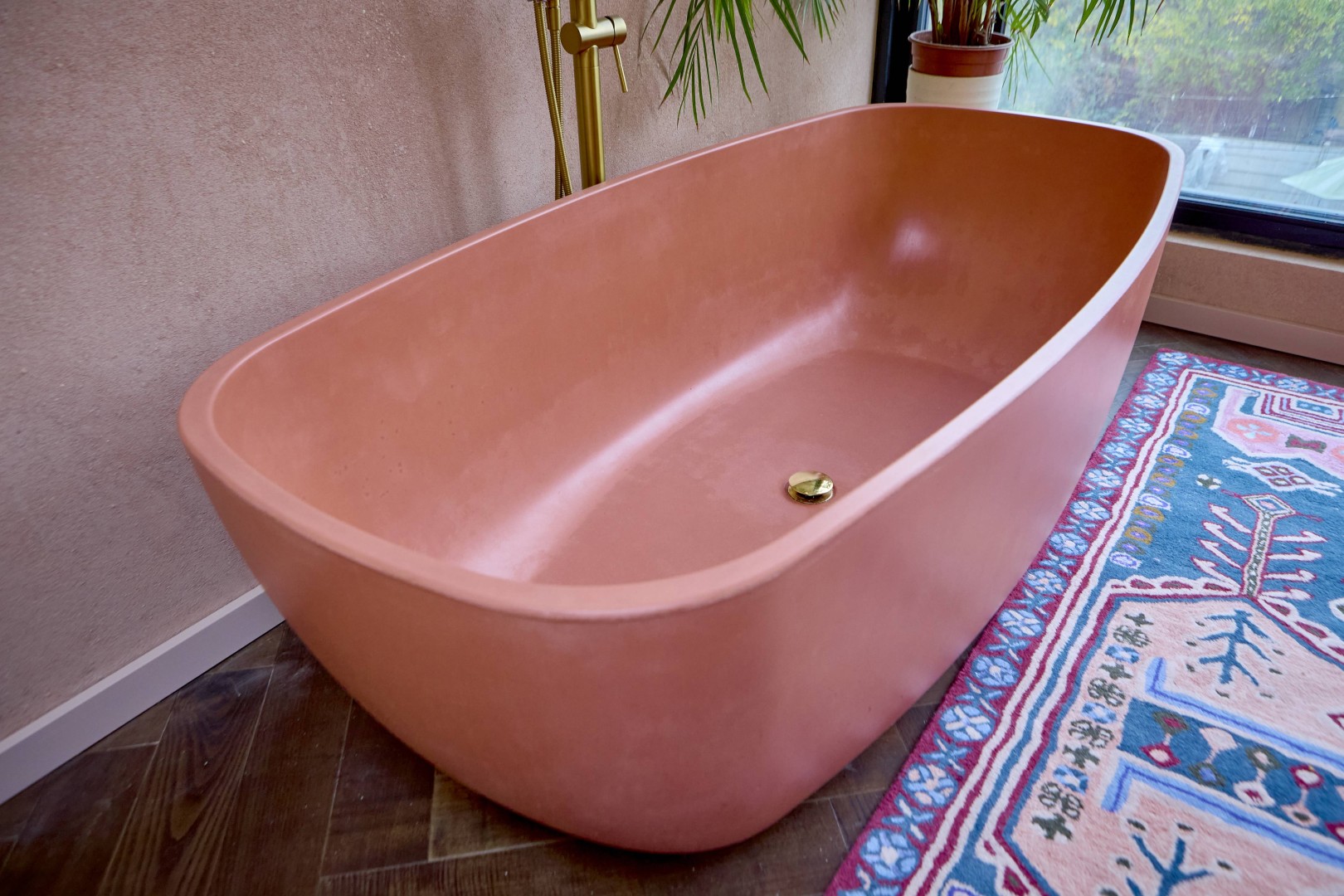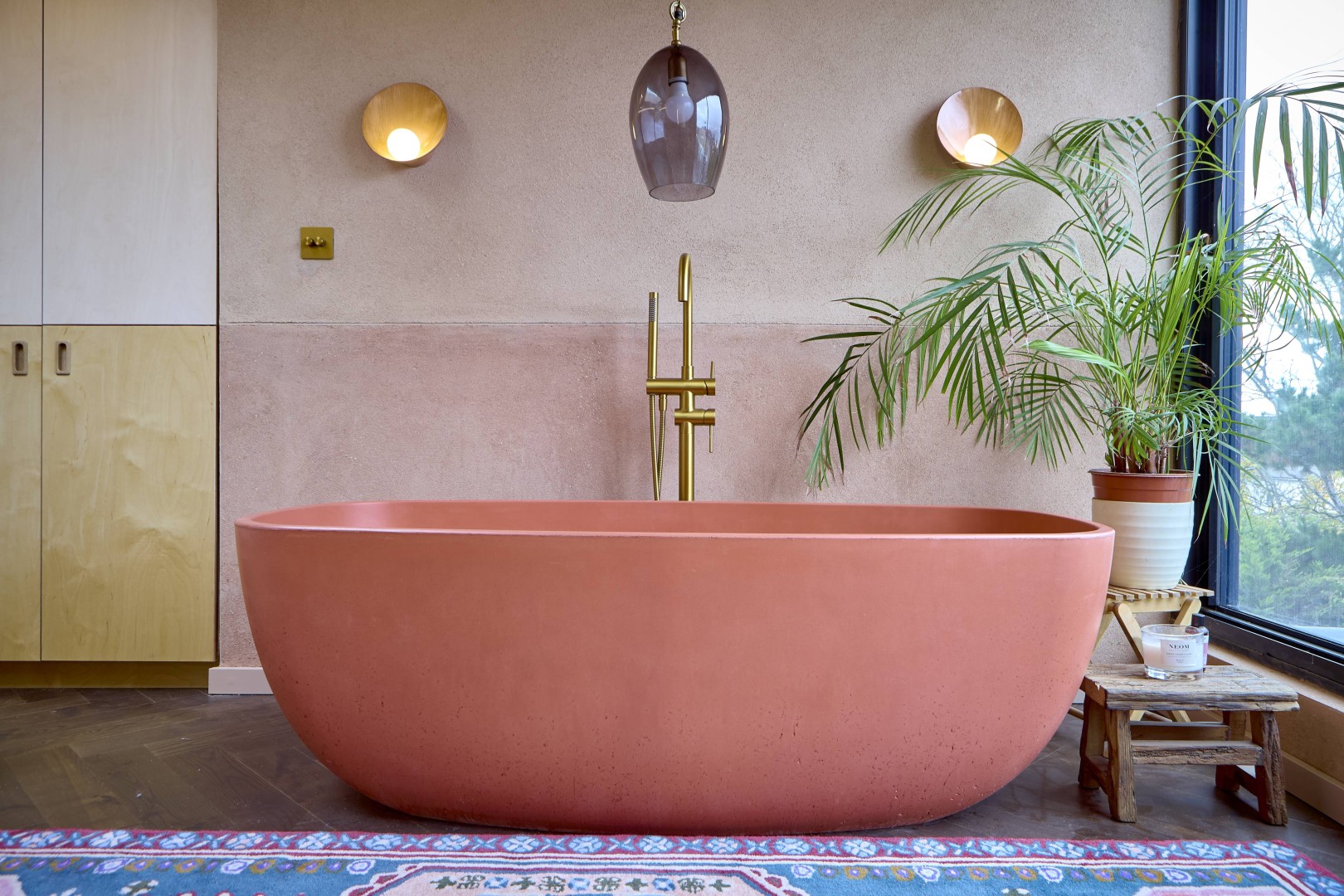
In most homes, a bathtub is a functional object that disappears quietly into the rhythm of a bathroom. In this home, however, the HEMA bathtub in Coral by Warrington and Rose does quite the opposite. It becomes the emotional and visual anchor of the room. It sets the tone for the colour palette, shapes how the space is experienced, and introduces a sculptural presence that transforms a bedroom into a place of calm retreat.
Rather than behaving as a typical sanitary fixture, the bath reads as a spatial statement. Its weight and saturation introduce a single, confident volume into a room otherwise defined by raw plaster, muted tones, and expressive textures. The bath organises the space not through function, but through feeling, materiality, and its opulent colour.
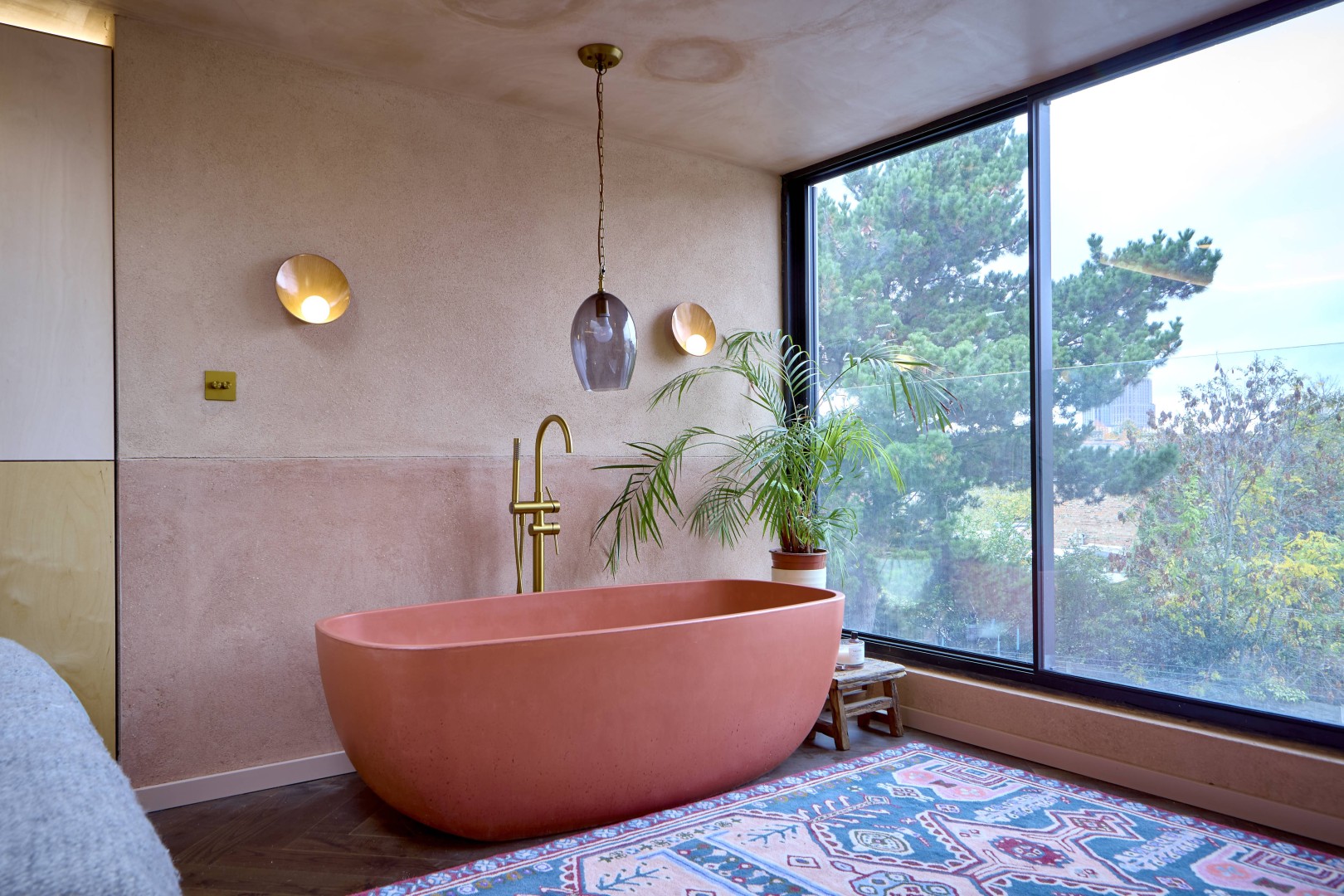
The colour was never an afterthought. As the owner explains, “the bath came first... we were mainly looking at the pink palette, the reds and the pinks”. Coral was chosen for its ability to energise the room without overwhelming it. “The coral is just so vivid, so you can play with all the muted pinks around it”. Here, colour becomes structural. It drives the atmosphere, the hierarchy, and the emotional read of the space, rather than simply decorating it.
Concrete, too, was a deliberate choice. Described as “a very utilitarian material, but... overlooked a lot”, it holds a duality that feels central to this project. “Something quite brutal and utilitarian, also being whimsical and playful”. That tension defines the bath itself: a heavy, monolithic object softened by curved edges and warm pigmentation. Its smooth, matte surface sits in quiet contrast to the surrounding rough, imperfect, earthy plaster.
Texture was always planned as part of the wider narrative. The raw walls were “planned from the very beginning with the architect... before the bath came along”, forming a tactile framework into which the bath would later settle. What emerges is a dialogue of surfaces: refined against coarse, saturated against subdued. As she puts it perfectly, “It is very imperfectly perfect... rough-textured and earthy, but again, also playful”.
Placing the bath in the bedroom only strengthens its presence. It becomes liberated from the usual rules of a bathroom layout. “I knew I wanted a feature bath. I knew I wanted it in the bedroom, and I knew I wanted it with a view”. In this setting, the bath moves closer to sculpture than utility. “To me, she is a piece of art... just to look at it is so beautiful, it’s like a sculpture”. Even its separation from other sanitary elements is intentional. “I don’t want that beautiful bath next to a toilet!"
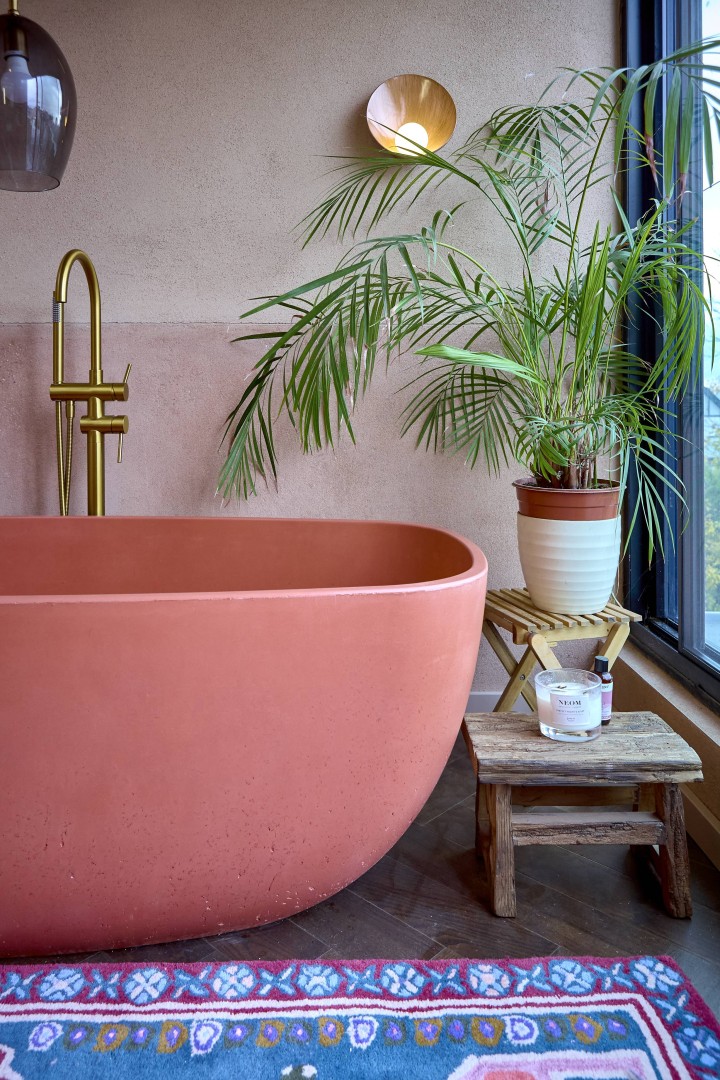
What unfolds is a form of quiet domestic monumentality. A single concrete volume that defines the room’s identity, determines its palette, and reshapes how the space is lived in. The bath does not simply exist within the room. It leads it, grounds it, and gives it its story.
And in the end, she says it best herself. “The phrase centrepiece is probably the right one”, and this bathtub as a centrepiece does indeed have a story of its own.