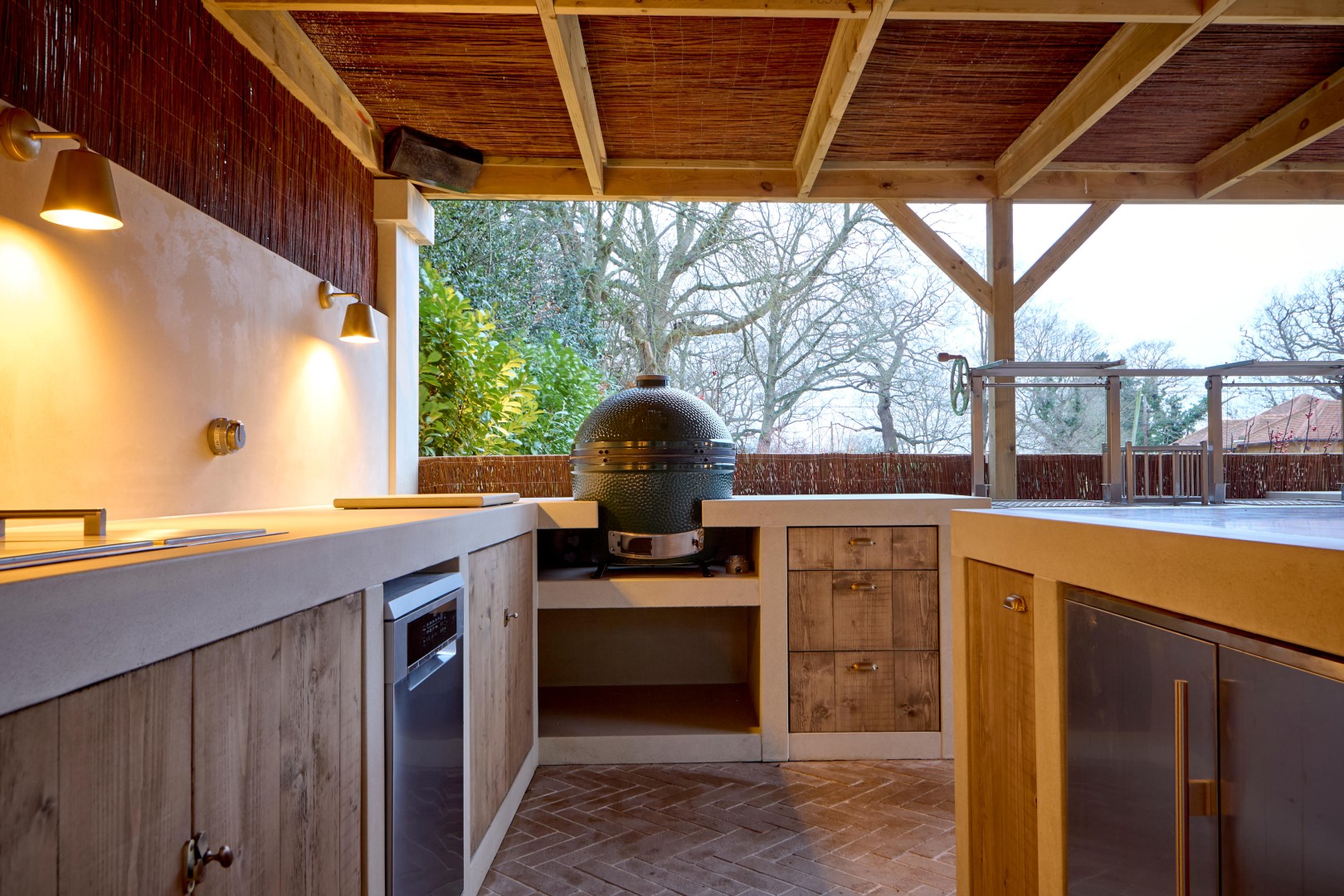
As spring approaches, our relationship with our homes begins to shift. Doors remain open longer, evenings stretch into dusk, and the garden evolves from a visual backdrop into a space that invites use and presence. Increasingly, outdoor kitchens are at the centre of this transition, moving from an occasional seasonal indulgence into a carefully considered extension of how we live, cook, and gather.
The movement toward alfresco living speaks to a desire for spaces that feel purposeful and enduring. An outdoor kitchen, when designed thoughtfully, becomes more than a place to prepare food. It encourages conversation, slows the pace of dining, and creates an environment where the act of cooking is shared rather than hidden away. It is as much about atmosphere as it is about function.
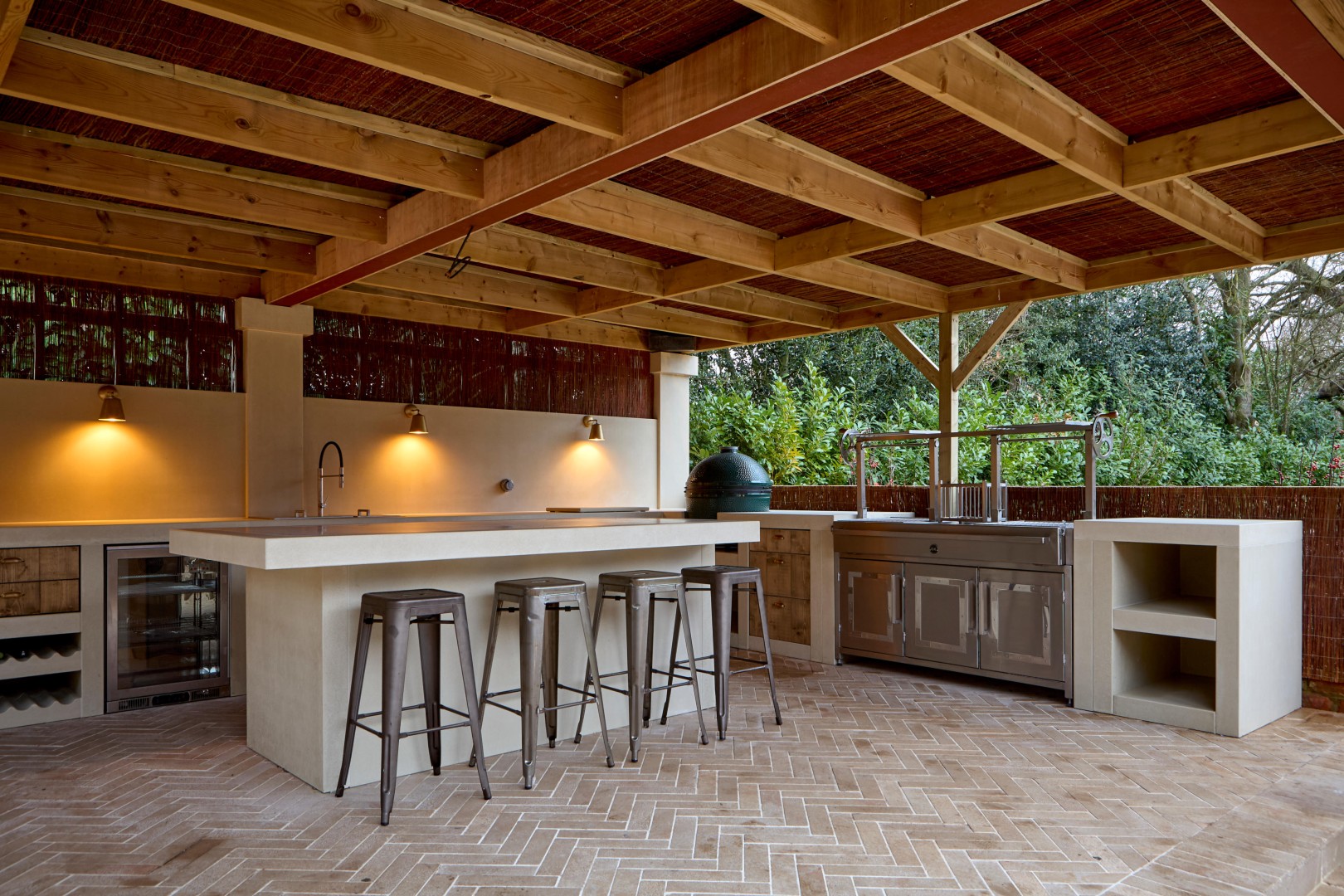
A recently completed project for our client, in Essex, captures this ethos with clarity and restraint. Fabricated over several weeks and installed just in time for the spring season, the kitchen is the result of careful planning, material understanding, and on-site precision. Constructed using 4.2 tonnes of Ultra High Performance Concrete (UHPC) and formed across 63 individual components, the structure was assembled piece by piece to ensure accuracy, longevity, and cohesion within its setting.
Concrete plays a defining role in this space. Its strength allows for generous work surfaces and integrated elements, while its understated texture brings a sense of permanence that feels grounded rather than imposing. In an outdoor environment, concrete responds naturally to light and weather, developing character over time rather than showing wear, an important consideration for spaces designed to be used frequently and lived in fully.
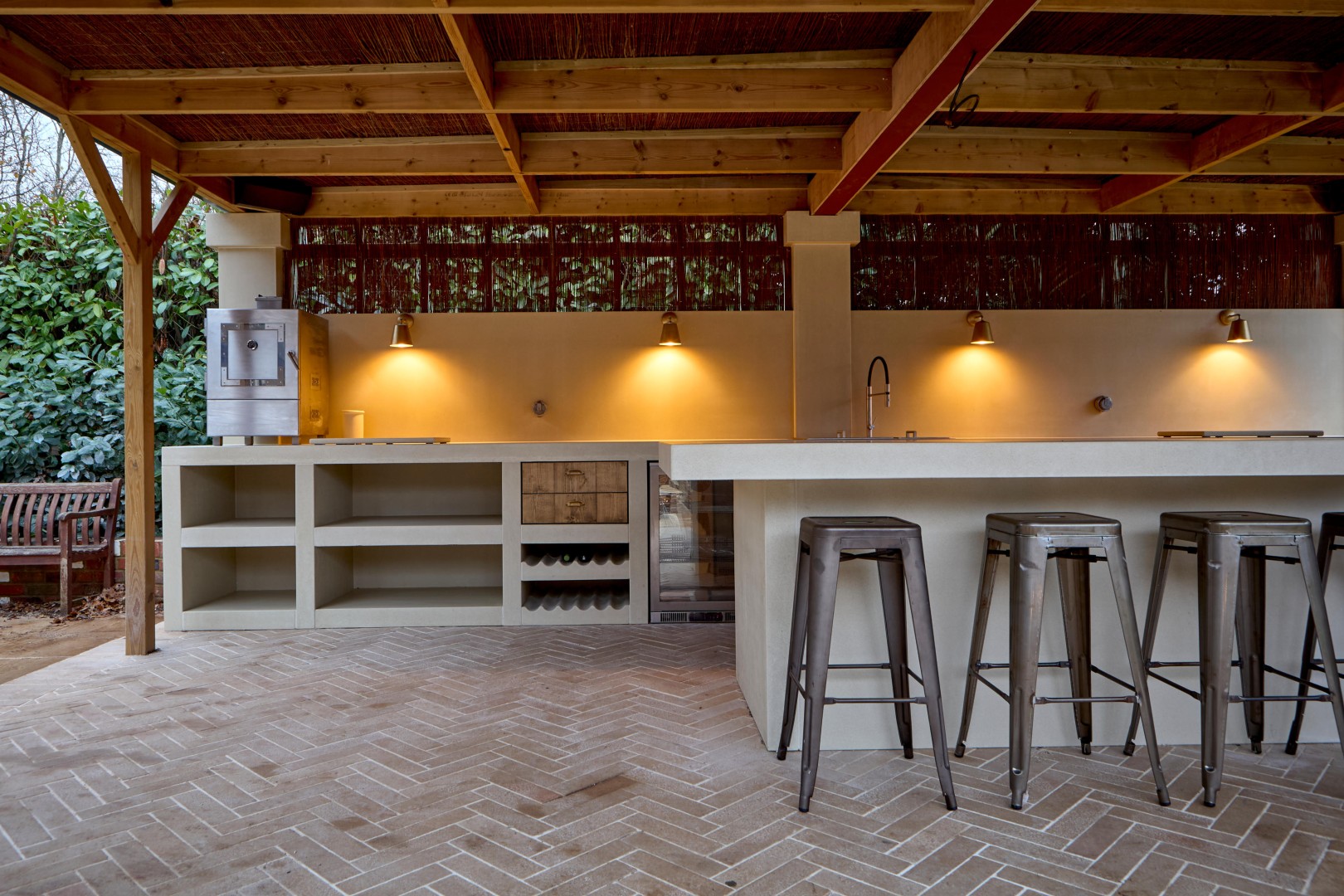
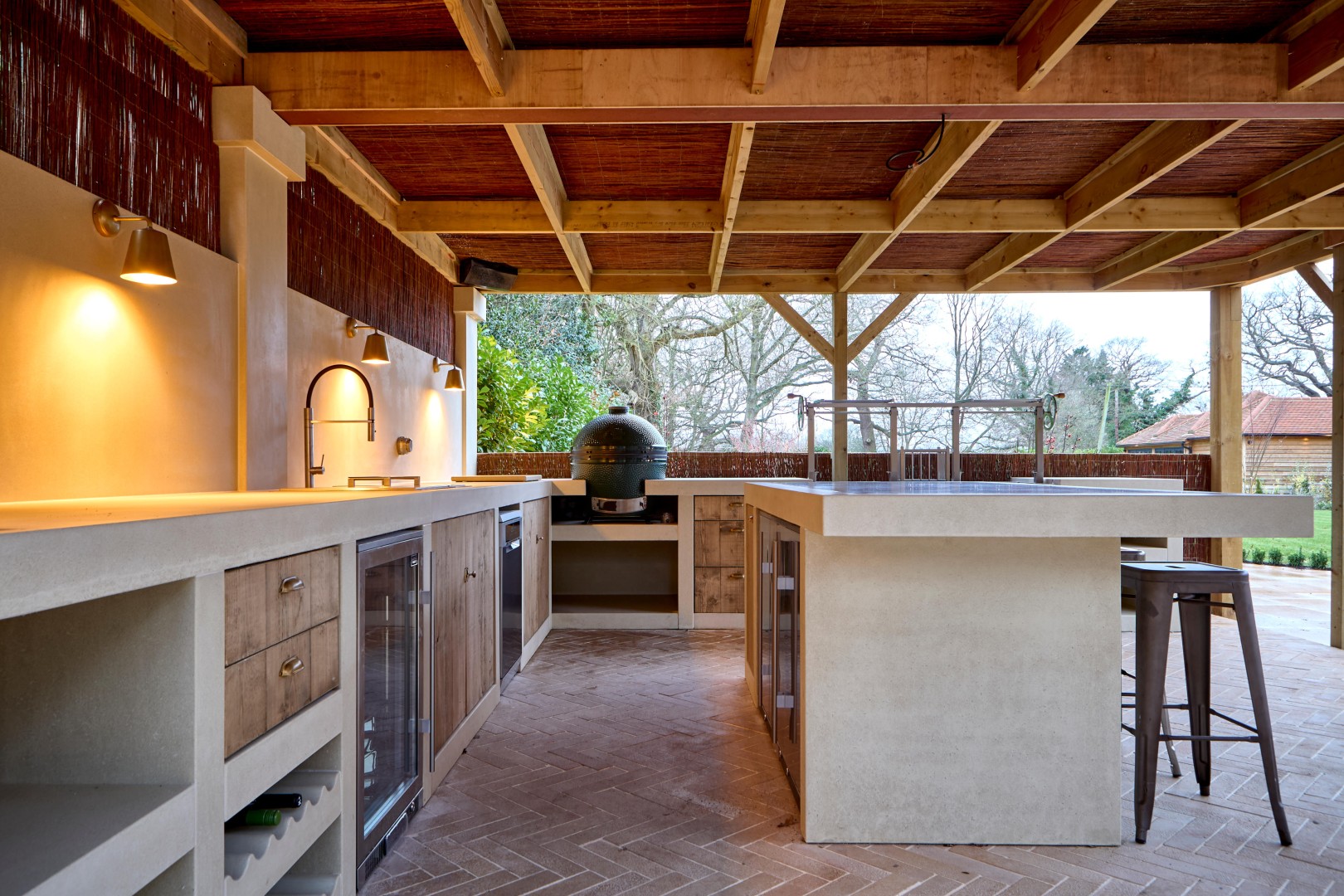
The layout has been shaped around real use and natural flow. A bespoke wine rack is seamlessly built into the structure, acknowledging that outdoor dining often unfolds gradually, long after cooking has finished. The custom layout incorporates log storage, houses industrial fridges and ample space to deposit all necessary equipment and utensils, keeping essentials close at hand without interrupting the visual rhythm of the space. An OX Oven rests on the counter, its stainless steel form adding a refined industrial edge to the otherwise streamlined design. On the opposing side, an Asado OX Grills grill unit provides a robust and expressive cooking centre, balancing performance with presence. At the heart of the kitchen, a substantial central island invites people to gather, creating a focal point that supports both preparation and pause.
What elevates outdoor kitchens of this scale is the way they integrate with their surroundings. Materials, proportions, and layout must work in dialogue with the architecture and landscape, ensuring the space feels intentional rather than added on. When approached holistically, the result is a kitchen that feels as resolved as any interior room, yet entirely open to its environment.
As we look ahead to spring 2026, alfresco kitchens continue to redefine how gardens are used and experienced. They extend the life of outdoor spaces, encourage longer stays, and transform everyday meals into moments worth lingering over. More than a design trend, they reflect a shift in how we value time, connection, and the spaces that bring people together.
Perhaps the most compelling aspect of outdoor kitchens is their quiet ability to change habits. When cooking moves outside, meals become shared experiences, gardens become destinations, and the home expands beyond its walls, offering a way of living that feels both grounded and generous, season after season.
*Acknowledgement:
- Kitchen design by Sally Anne McCoy | Edwards McCoy Interior Design London
OX Oven + Asado OX Grill grill by OX Grills | OX Grills
Big Green Egg oven by The Big Green Egg Company | The Big Green Egg Company
